I am learning flutter from JustAcademy, They provide very much great environment where people gather and work simultaneously. totally project based training institute.
MOHD ABU BAKAR ANSARI
Flutter Developer
Awesome Experience. I am a Front-end Web Designer working at Star India for 3 years now. I applied for Full-stack development and my experience has been phenomenal & they really do help with placements exceptionally. Thank you Roshan sir so much.
Compare Top Android Emulators to Test and Debug Your React Native Apps Faster
Best Android Emulator for React Native Development in 2025
Compare Top Android Emulators to Test and Debug Your React Native Apps Faster
Choosing the right Android emulator can make or break your React Native development workflow. Whether you're testing UI responsiveness, debugging performance issues, or simulating different device configurations, the emulator you use directly impacts your productivity and app quality.
In this guide, we've compared the top 6 Android emulators for React Native in 2025 — covering features, performance, pros, cons, and best use cases — so you can pick the right one for your project.
What Is an Android Emulator and Why Do React Native Developers Need One?
An Android emulator is a virtual Android device that runs on your computer, allowing you to test and debug mobile applications without needing a physical device. For React Native developers, emulators are essential because:
React Native apps must be tested across multiple Android versions and screen sizes
Physical devices are expensive and limited in variety
Emulators allow instant hot-reloading and real-time debugging
They simulate GPS, network conditions, sensors, and more
How Does a React Native App Run on an Emulator?
When you run npx react-native run-android, React Native bundles your JavaScript code and deploys it to the connected emulator. The Metro bundler serves the JS bundle while native Android components render the UI — giving you a near-real experience of how your app will behave on actual devices.
Quick Comparison – Best Android Emulators for React Native
Emulator
Best For
Speed
React Native Support
Free/Paid
Android Studio Emulator
Official development
Medium
Excellent
Free
Genymotion
Professional testing
Fast
Excellent
Freemium
NoxPlayer
Multi-instance testing
Fast
Good
Free
BlueStacks
Casual app testing
Fast
Good
Free
MEmu Play
Gaming & app testing
Fast
Good
Free
LDPlayer
Performance testing
Very Fast
Good
Free
1. Android Studio Emulator – Best Overall for React Native
The Android Studio Emulator is the official emulator from Google and the most recommended choice for React Native developers. It is deeply integrated with the Android development ecosystem and provides the most accurate simulation of real Android devices.
Key Features
Simulates a wide range of Android devices and screen sizes
Supports real-time performance monitoring and debugging
Built-in tools for CPU, memory, and network profiling
GPS simulation, battery status, and sensor emulation
Snapshot feature — save and restore emulator states instantly
Fully integrated with Android Studio IDE
Supports the latest Android API levels
Pros and Cons
Pros
Cons
Official Google support
Slower startup time
Best React Native compatibility
Requires high RAM (8GB+)
Free to use
Heavy on system resources
Regular updates
Complex initial setup
Who Should Use It?
Every React Native developer should have Android Studio Emulator set up as their primary testing environment. It is the most reliable and feature-complete option available.
Setup Tip
Enable Hardware Acceleration (HAXM or KVM) on your system to significantly improve Android Studio Emulator speed and performance.
2. Genymotion – Best for Professional and Team Testing
Genymotion is a high-performance Android emulator widely used by professional developers and QA teams. It is known for its speed, reliability, and advanced testing features that go beyond what the standard Android Studio Emulator offers.
Key Features
Pre-configured virtual device profiles for popular Android phones
Cloud deployment option — test without hardware constraints
Simulates network conditions and API responses
Drag and drop file sharing between host and emulator
Seamless integration with CI/CD pipelines
Compatible with popular tools like Jenkins and Selenium
Pros and Cons
Pros
Cons
Extremely fast boot time
Free version has limitations
Excellent for CI/CD pipelines
Paid plan required for cloud features
Great network simulation tools
Slightly complex for beginners
Strong community support
Not officially endorsed by Google
Who Should Use It?
Genymotion is ideal for development teams and QA engineers who need fast, reliable testing across multiple device profiles and want to integrate emulation into automated testing pipelines.
3. NoxPlayer – Best for Multi-Instance Testing
NoxPlayer is a user-friendly Android emulator that is popular among both developers and gamers. Its standout feature is multi-instance support — allowing developers to run multiple virtual devices simultaneously.
Key Features
Simple, clean user interface
Supports multiple simultaneous instances with different configurations
Screen recording for bug reporting and demos
Customizable CPU and RAM allocation
Supports Android 7 and above
Built-in keyboard mapping
Pros and Cons
Pros
Cons
Easy to set up and use
Not optimized for React Native officially
Multi-instance support
Performance may vary on low-end systems
Free to use
Less developer-focused than Android Studio
Good performance
Fewer debugging tools
Who Should Use It?
NoxPlayer is great for developers who need to test apps on multiple device configurations simultaneously without the complexity of Android Studio.
4. BlueStacks – Best for Compatibility and Ease of Use
BlueStacks is one of the most widely used Android emulators globally, originally designed for running mobile games on PC. While it's not a developer-first tool, it offers excellent compatibility and ease of use for React Native app testing.
Key Features
Runs on both Windows and macOS
High compatibility with a wide range of Android versions
Custom key mapping for simulating touch inputs
Frequently updated to support latest Android releases
Eco mode to reduce resource consumption
Pros and Cons
Pros
Cons
Very easy to set up
Not designed for serious development
Cross-platform (Windows + Mac)
Limited debugging capabilities
High app compatibility
Ad-supported in free version
Frequent updates
Slower for heavy React Native apps
Who Should Use It?
BlueStacks is best suited for quick compatibility testing of React Native apps, especially for developers checking how their app behaves for casual end users.
5. MEmu Play – Best for Performance Flexibility
MEmu Play is a lightweight yet powerful Android emulator that offers strong performance and flexibility. It is particularly effective for developers who need to test React Native apps across different Android versions and hardware configurations.
Key Features
Supports multiple Android versions (Android 5 to Android 9)
Dynamic performance optimization based on system resources
File sharing between emulator and host computer
OpenGL and DirectX support for graphics-intensive apps
Virtual keyboard and mouse support for precise input testing
Multiple instance support
Pros and Cons
Pros
Cons
Lightweight and fast
Primarily gaming-focused
Good graphics support
Limited developer tools
Easy file sharing
Smaller developer community
Multiple Android version support
Less documentation available
Who Should Use It?
MEmu is a solid choice for React Native developers building graphics-heavy or animation-rich applications who need flexible performance settings.
6. LDPlayer – Best for High FPS and Performance Testing
LDPlayer is known for its gaming optimization but performs equally well for React Native app development. It offers high frame rate support and excellent compatibility across Android versions.
Key Features
Optimized for high FPS — ideal for apps with heavy animations
Supports multiple Android versions for compatibility testing
Customizable screen resolutions for different device simulations
Simple and clean interface
Low resource consumption compared to Android Studio Emulator
Pros and Cons
Pros
Cons
Very fast and lightweight
Gaming-first design
High FPS for animation testing
Limited debugging tools
Multiple resolution options
Not ideal for complex React Native debugging
Free to use
Smaller developer ecosystem
Who Should Use It?
LDPlayer is perfect for testing React Native apps that involve smooth animations, transitions, and interactive UI elements where frame rate matters.
How to Set Up Android Studio Emulator for React Native
Step 1 – Install Android Studio
Download and install Android Studio from the official Google website. During setup, make sure to install the Android SDK and Android Virtual Device (AVD) Manager.
Step 2 – Create a Virtual Device
Open AVD Manager → Click "Create Virtual Device" → Choose a device profile → Select an Android system image → Finish setup.
Step 3 – Enable Hardware Acceleration
For Windows: Install Intel HAXM from SDK Manager. For Linux: Enable KVM. This dramatically improves emulator speed.
Step 4 – Run Your React Native App
Start the emulator from AVD Manager, then run the following command in your project directory:
npx react-native run-android
Step 5 – Enable Hot Reloading
Press R twice in the emulator or shake the device to open the developer menu and enable Fast Refresh for real-time updates.
Common Issues and Fixes When Using Android Emulators with React Native
Issue
Fix
Emulator running slow
Enable HAXM / KVM, allocate more RAM
App not connecting to Metro bundler
Run adb reverse tcp:8081 tcp:8081
Black screen on emulator
Cold boot the emulator from AVD Manager
Emulator not detected
Check adb devices and restart ADB server
Build fails on emulator
Clean project with cd android && ./gradlew clean
Which Android Emulator Should You Choose for React Native?
Your Need
Recommended Emulator
Best overall development
Android Studio Emulator
Fastest performance
Genymotion
Multi-device testing
NoxPlayer
Easy setup for beginners
BlueStacks
Animation and graphics testing
LDPlayer
Flexible performance control
MEmu Play
Frequently Asked Questions
Which emulator is best for React Native beginners?
Android Studio Emulator is the best starting point for beginners as it is officially supported, well-documented, and deeply integrated with the React Native development workflow.
Can I use BlueStacks for React Native development?
Yes, but it is not recommended for serious development. BlueStacks lacks advanced debugging tools that React Native developers need. Use it only for quick compatibility checks.
Is Genymotion free for React Native?
Genymotion offers a free version for personal use with basic features. The cloud and advanced features require a paid subscription.
Why is my Android Studio Emulator so slow?
The most common reason is missing hardware acceleration. Enable Intel HAXM on Windows or KVM on Linux to significantly boost emulator performance.
Can I test React Native on multiple emulators at once?
Yes. NoxPlayer and MEmu Play both support multiple instances, allowing you to test your React Native app on several virtual devices simultaneously.
Master React Native Development with JustAcademy
Want to go beyond emulator setup and build production-ready React Native apps? JustAcademy's React Native Training Course covers everything from environment setup and component building to API integration, navigation, and deployment — with real-world projects and placement support.
A practical, no fluff guide to what it actually takes to build a career as a PHP Laravel developer, written for learners in Pune who want a real answer, not a recycled one.
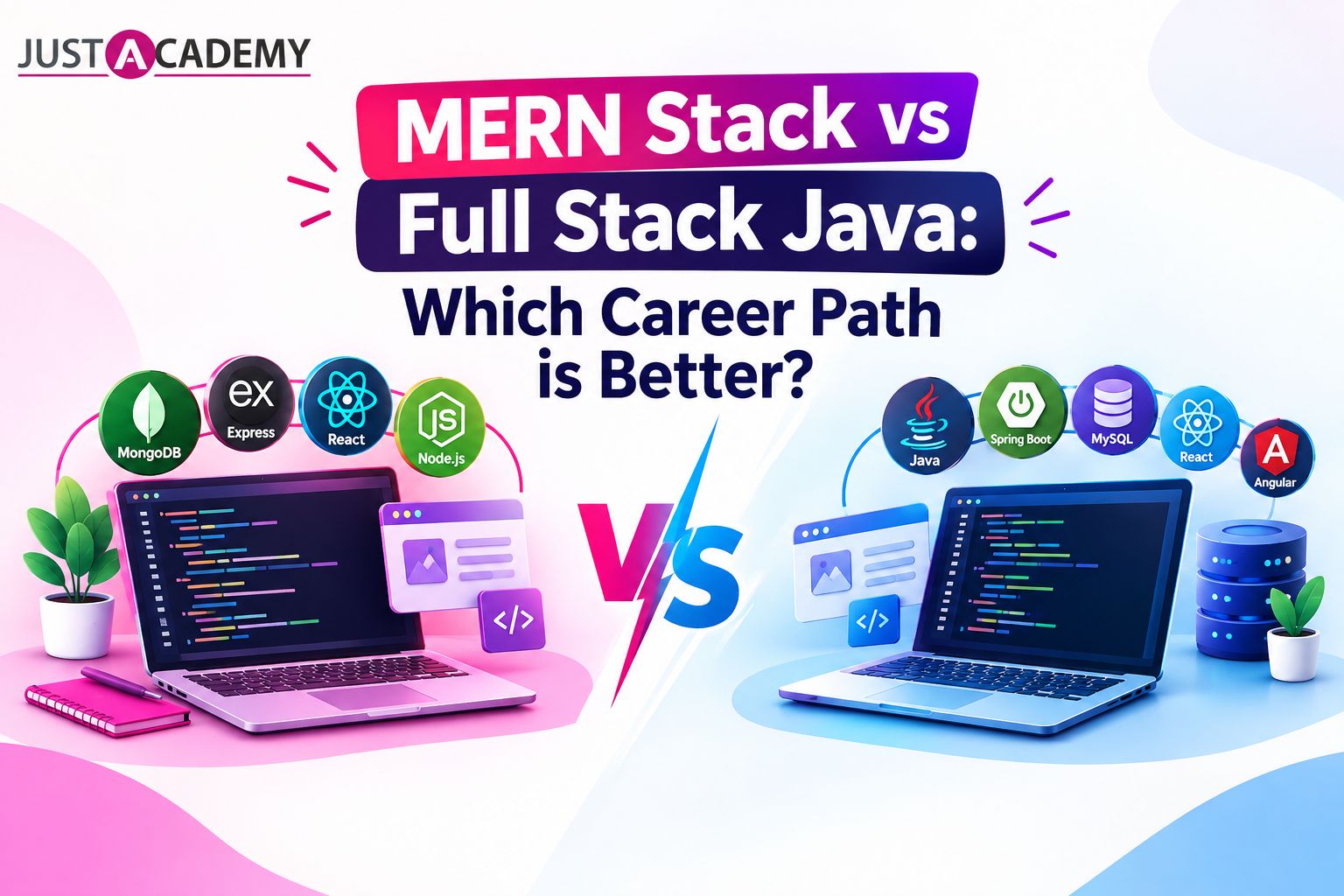
A practical comparison for Pune based learners choosing between MERN and Java full stack development, covering salary, learning curve, job roles, and long term career growth.